

Unlocking Your Hidden Talents: A Guide
01/18/2026
Daily Habits to Boost Your Cognitive Abilities
01/18/2026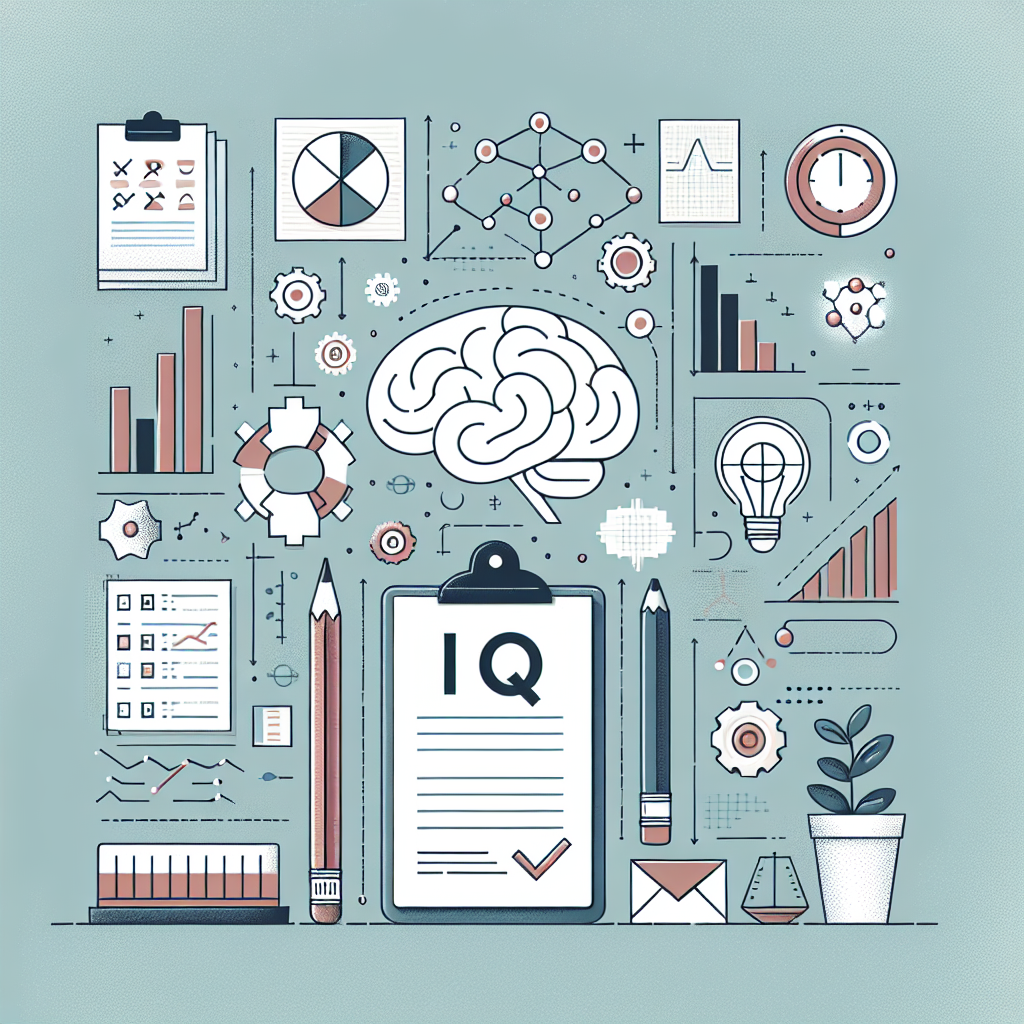
The Science Behind IQ Testing Explained
The Science Behind IQ Testing Explained
IQ testing has been a topic of intrigue and debate for over a century. These tests are designed to measure a range of cognitive abilities, providing a numerical score that aims to reflect an individual’s intellectual capacity. Understanding the science behind IQ testing can help individuals not only prepare for these assessments but also grasp their implications in various aspects of life.
What is IQ?
IQ, or Intelligence Quotient, is a score derived from standardized tests intended to measure human intelligence. The average IQ score is set at 100, with most people scoring between 85 and 115. Scores are calculated based on various cognitive abilities, including:
- Logical reasoning
- Mathematical skills
- Language proficiency
- Spatial understanding
- Memory retention
The History of IQ Testing
The origins of IQ testing can be traced back to the early 20th century with the work of Alfred Binet and Théodore Simon, who developed the first practical intelligence test in France. Their goal was to identify students needing educational support. Over time, the tests evolved, leading to the creation of various standardized tests like the Stanford-Binet and the Wechsler scales.
Types of IQ Tests
There are several types of IQ tests, each designed to measure different aspects of intelligence. Here are some commonly used tests:
- Stanford-Binet Intelligence Scale: Focuses on verbal and non-verbal reasoning.
- Wechsler Adult Intelligence Scale (WAIS): Measures cognitive ability in adults.
- Wechsler Intelligence Scale for Children (WISC): Designed for children aged 6 to 16.
- Ravens Progressive Matrices: Assesses abstract reasoning and is culture-fair.
How IQ Tests Work
IQ tests typically consist of a series of tasks that measure different cognitive abilities. The tests are scored based on the number of correct answers, with performance compared to the average results of a large sample group. This comparison helps to establish a person’s IQ score. The key components of these tests often include:
- Verbal comprehension
- Working memory
- Processing speed
- Perceptual reasoning
Common Misconceptions About IQ
Many misconceptions exist about IQ testing. One common myth is that IQ tests measure innate intelligence and cannot change over time. However, research indicates that cognitive abilities can be developed through education and experience. Other misconceptions include:
- IQ scores determine success in life.
- All intelligence can be measured by a single number.
- IQ tests are entirely culture-free.
The Benefits of Understanding IQ Testing
Grasping the science behind IQ testing offers several benefits:
- Improved test preparation: Knowledge of test types and structures helps in effective preparation.
- Personal development: Understanding your strengths and weaknesses can guide learning paths.
- Career insights: Some professions may require specific cognitive abilities that align with certain IQ tests.
Best Practices for Preparing for IQ Tests
To maximize your potential on IQ tests, consider the following strategies:
- Practice regularly with sample tests to familiarize yourself with the format.
- Engage in cognitive exercises such as puzzles and brain games.
- Focus on developing specific skills like logical reasoning and problem-solving.
- Maintain a healthy lifestyle, as physical well-being influences cognitive performance.
Conclusion
Understanding the science behind IQ testing is essential for anyone looking to enhance their cognitive abilities or prepare for an assessment. By recognizing the history, types, and common misconceptions surrounding IQ tests, individuals can approach these assessments with confidence. Utilizing best practices in preparation and personal development can lead to improved scores and a better understanding of one’s intellectual potential. Embrace the journey of discovery and growth in your cognitive abilities, as it is a valuable investment in your future.